



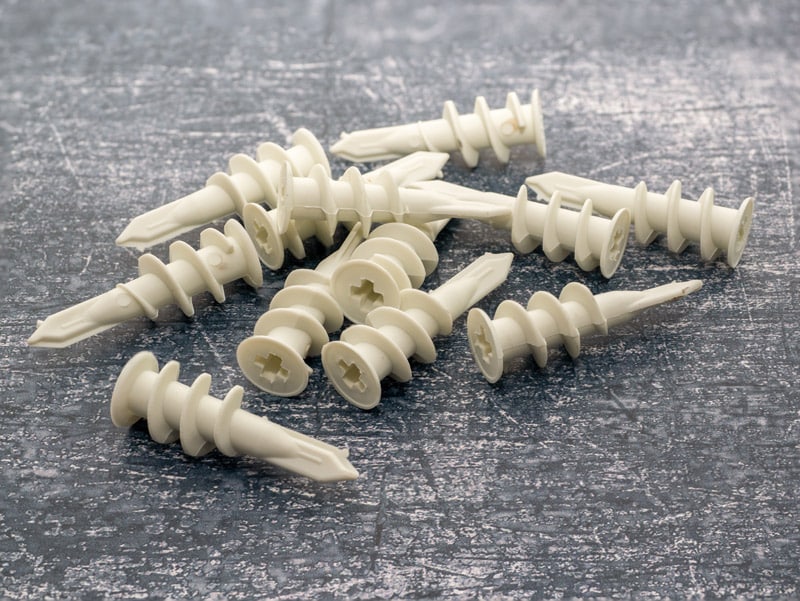
While drywall anchors and masonry anchors are generally similar in appearance, they are designed for completely different materials. They also don’t behave the same way under load.
In this post, we provide you with the important details on drywall and masonry anchors so you’ll know the difference between the two and be able to confidently select the right option for your project needs.
Types of Anchors: Drywall vs. Masonry Anchors
Anchors fall into one of several types:
- Drywall anchor options “grip” gypsum board, or hollow wall material, by expanding, threading, or clamping behind the wall surface.
- Masonry anchors are built for solid materials like concrete, block, or brick. They grip by expanding, wedging in place, or grabbing the material with threads.
Deciding between the two anchor types will depend on the base material. It’s also important to consider the load and environment for optimal results.
Masonry Anchors
Masonry anchors are useful when fastening to CMU (block), concrete, or brick. They will often be specified by anchor type and base material.
Masonry anchors are commonly used for:
- Mounting equipment, pipe supports, racking, or guardrails to concrete
- Attaching fixtures to block walls (with the right anchor style for hollow versus solid block)
- Fastening to brick (only when the job and wall are a good fit)
Heavy Duty Dry Wall Anchors
When you need something stronger than a basic plastic expansion anchor, heavy-duty dry-wall anchors are a reliable choice. These can include:
- Toggle-style anchors (spring toggles or strap toggles) that clamp behind the drywall
- Molly bolts (hollow-wall anchors) that expand behind the wall when tightened
- Heavy-duty self-drilling drywall anchors that thread into drywall (best for light-to-medium loads)
How to Use Drywall Anchors
The way you use drywall anchors depends on the anchor style. Most installs will follow this general process:
- Determine the wall type and thickness first. Most drywall is 1/2″ or 5/8″, and the anchor package will tell you what thickness it fits.
- Mark the spot and check for anything behind the wall, avoiding wiring and plumbing whenever possible.
- Drill a pilot hole if required. Some anchors are self-drilling, while others need a specific hole size.
- Push-in, tap-in, thread-in, or insert toggle hardware per the anchor type.
It’s important to test the anchor before full loading, especially for anything overhead or safety-related.
Which Anchor Should I Use for Drywall?
The following are potentially useful options for drywall anchors:
- Plastic expansion anchors. Best for light items like photographs, towel bars, and signage.
- Self-drilling threaded anchors. Common with medium-weight applications like shelves and light fixtures.
- Toggle bolts. Suitable for heavier items like large TVs and cabinets.
Do I Need a Special Drill Bit for Anchors?
A standard twist bit in the specified size works for many drywall anchors. You’ll usually need a masonry bit (carbide-tipped) and sometimes a hammer drill for masonry anchors, especially in concrete.
Additional Questions and Considerations
Consider the following questions and variables that can make the difference when installing anchors.
What’s the biggest mistake people make?
Don’t use a drywall anchor in masonry or vice versa. A drywall anchor isn’t made to grip solid concrete, and masonry anchors won’t expand correctly in hollow drywall.
Can I use masonry anchors in brick?
Yes, if you choose the right type for brick and factor in the condition of the material. Brick and mortar can crack if the wrong anchor is over-torqued.
What about corrosion resistance?
If the area is humid, outdoors, or near chemicals, choose a stainless steel or a protective coating that fits the environment and any other needs.
Contact Associated Fastening Products, Inc. to Learn More
Choosing between drywall and masonry anchors involves a few important steps: know what you’re fastening into, pick an anchor that fits the weight and the environment, and install and test it for the intended application. A little homework up front can help you avoid callbacks, prevent wall damage, and keep everything safe and reliable.
Need help selecting the right drywall anchor, heavy-duty drywall anchors, or masonry anchor bolts for your project? Do you want to standardize anchor options across your maintenance kits? Associated Fastening is here to help.
Contact us at any time to talk to a fastener specialist or request a quote today.