



 Associated Fastening Products, Inc. specializes in aluminum stamping, a popular metalworking technique used to form sheet metal into various products and components. Our extensive experience and unparalleled capabilities enable us to provide reliable aluminum stampings for industries including the aerospace, automotive, electronics, and medical sectors.
We continually strive for excellence in everything we do, and we are committed to delivering the highest level of quality by implementing stringent ISO standards, conducting ongoing employee training, and continually upgrading our aluminum stamping kit equipment, processes, and facilities.
Aluminum Metal Stamping Process
Metal stamping encompasses several forming methods used to convert a standard aluminum piece into parts according to the customer’s precise specifications:
- Blanking. A special die is used to cut precise workpieces out of aluminum sheet metal. The process creates clean aluminum stamping blanks that can be used with a stamping press or other type of machinery for further processing.
- Piercing. A punch and die are used to create slots, holes, or notches into the piece. The process is more efficient than laser cutting and produces tighter tolerances than drilling, allowing for cleaner cuts.
- Drawing. The application of tensile force can form components into various thicknesses and shapes. The process is often used to create electronic parts and involves slowly stretching the aluminum stamping blanks over the die to create a new shape.
- Forming. A universal term that refers to the process and techniques used to form or shape stamping blanks.
Advantages of Aluminum Stamping
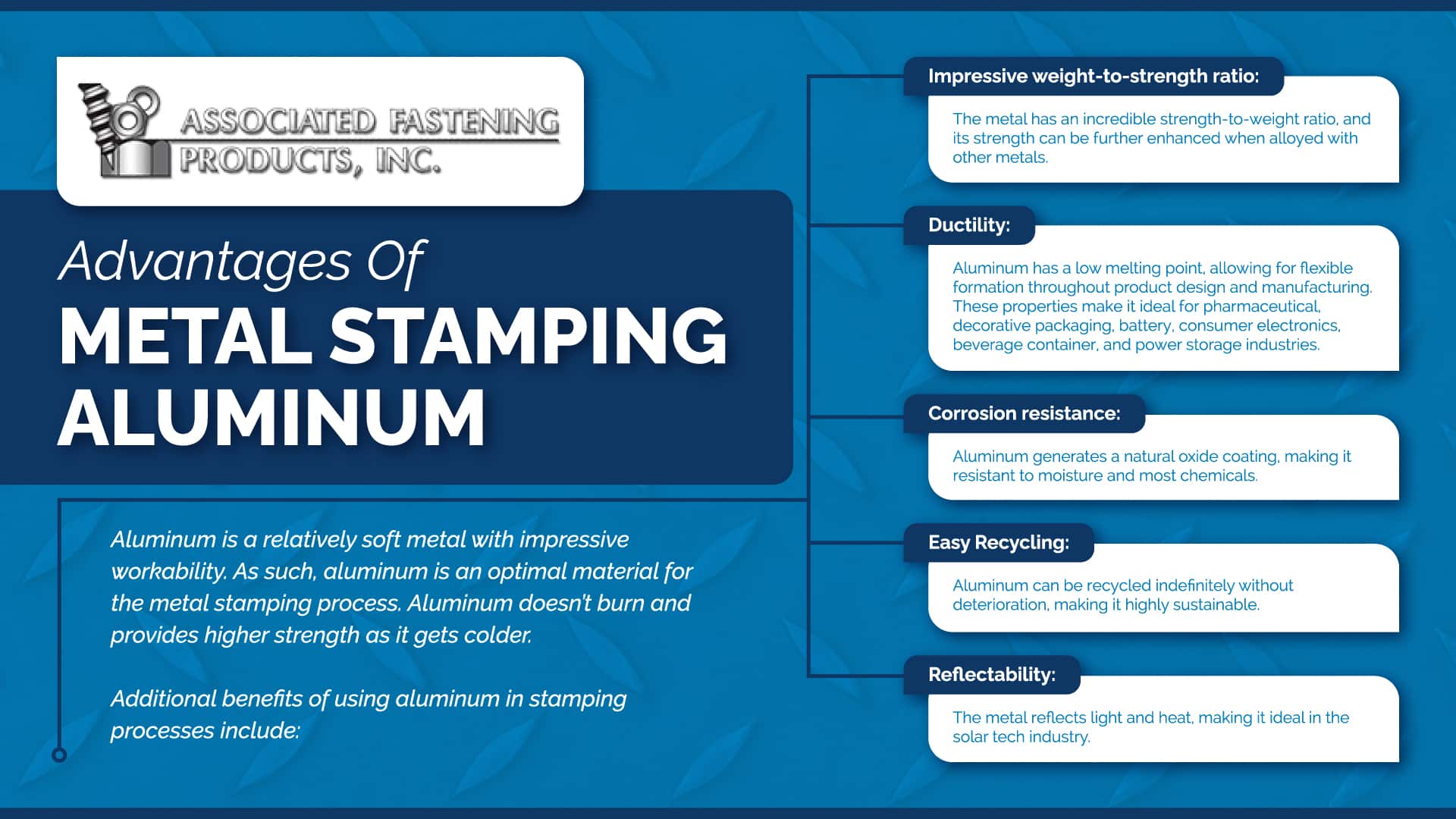
Aluminum is a relatively soft metal with impressive workability. As such, aluminum is an optimal material for the metal stamping process. Aluminum doesn’t burn and provides higher strength as it gets colder.
Additional benefits of using aluminum in stamping processes include:
- Impressive Weight-to-Strength Ratio: The metal has an incredible strength-to-weight ratio, and its strength can be further enhanced when alloyed with other metals.
- Ductility: Aluminum has a low melting point, allowing for flexible formation throughout product design and manufacturing. These properties make it ideal for pharmaceutical, decorative packaging, battery, consumer electronics, beverage container, and power storage industries.
- Corrosion Resistance: Aluminum generates a natural oxide coating, making it resistant to moisture and most chemicals.
- Easy Recycling: Aluminum can be recycled indefinitely without deterioration, making it highly sustainable.
- Reflectability: The metal reflects light and heat, making it ideal in the solar tech industry.
Commonly Used Alloys for Metal Stamping
Pure aluminum is typically alloyed with other metals to strengthen some properties and improve the end product’s performance. The alloys are each assigned a unique 4-digit code depending on the primary alloying element.
Common types of aluminum alloys as used in the metal stamping process include:
- 1100: 1100 alloys have a minimum aluminum content of 99%. It is perfect for projects needing challenging forming operations due to its softness, ductility, and workability. 1100 has the highest thermal and electrical conductivity.
- 3003: This is the most commonly used aluminum alloy. It uses manganese to elevate tensile strength. It is mostly used for drawing, fuel tanks, spinning, and sheet metal work. In addition, it is corrosion-resistant and non-heat-treatable.
- 5052: It is the highest strength alloy of the non-heat-treatable grades. The alloy is highly resistant to saltwater corrosion, making it ideal for marine applications. 5052 alloys are suitable for creating intricate structures.
- 6061: This is the most versatile heat-treatable alloy. This alloy is corrosion resistant and has a variety of mechanical properties.
Industrial Applications for Stamped Aluminum Parts
Aluminum is flexible, durable, and dimensionally stable, making it a preferred material for a diverse range of industrial applications. Aluminum frequently replaces heavier steel components due to its ability to reduce weight without sacrificing reliability.
Industries that rely on aluminum stamped parts and components include:
- Aerospace. The aluminum stamping process produces highly precise, durable aerospace parts, which include panels, housings, and electrical connectors.
- Automotive. Stamped aluminum parts can significantly reduce vehicle weight to improve fuel efficiency. Common applications include chassis components, electric vehicle components, vehicle trim, and structural parts.
- Chemical. Aluminum stampings are often used for brackets, enclosures, and housings in the chemical processing industry due to the material’s versatility, high strength-to-weight ratio, and excellent corrosion resistance.
- Electrical. Aluminum offers excellent thermal conductivity and formability, making it a preferred material for producing brackets, heat sinks, busbars, housings, and connectors.
- Medical. Due to its non-magnetic properties and non-toxic nature, aluminum is suitable for medical devices and other lightweight components.
- Construction. The construction industry relies on aluminum stamping for creating braces, roofing panels, siding, fasteners, and more.
Choose Associated Fastening Products. Inc. for Your Aluminum Stamped Parts
At Associated Fastening Products, Inc., we produce a diverse range of standard and custom stamped parts to meet the needs of our valued customers. We also offer additional services that include:
- Assembly
- Plating
- Welding
- Reverse engineering
- Kitting
- Special packaging
- Warehousing
As an established one-stop shop, we offer competitive pricing and our talented team consistently produces aluminum stamped products and services that support our ongoing efforts to deliver the highest standards of quality and service.
Contact us today and discover how aluminum stamping services from Associated Fastening Products, Inc. can meet the unique demands of your project.